AI Tools for Students That Actually Make Learning Smarter
Jun 03, 2026
Here is what nobody warns parents about. Your child already uses AI. Has been for months. The difference between students pulling ahead and those falling behind is not access. Every student has access. It is whether anyone taught them to use AI tools for students as a thinking partner instead of an answer machine.
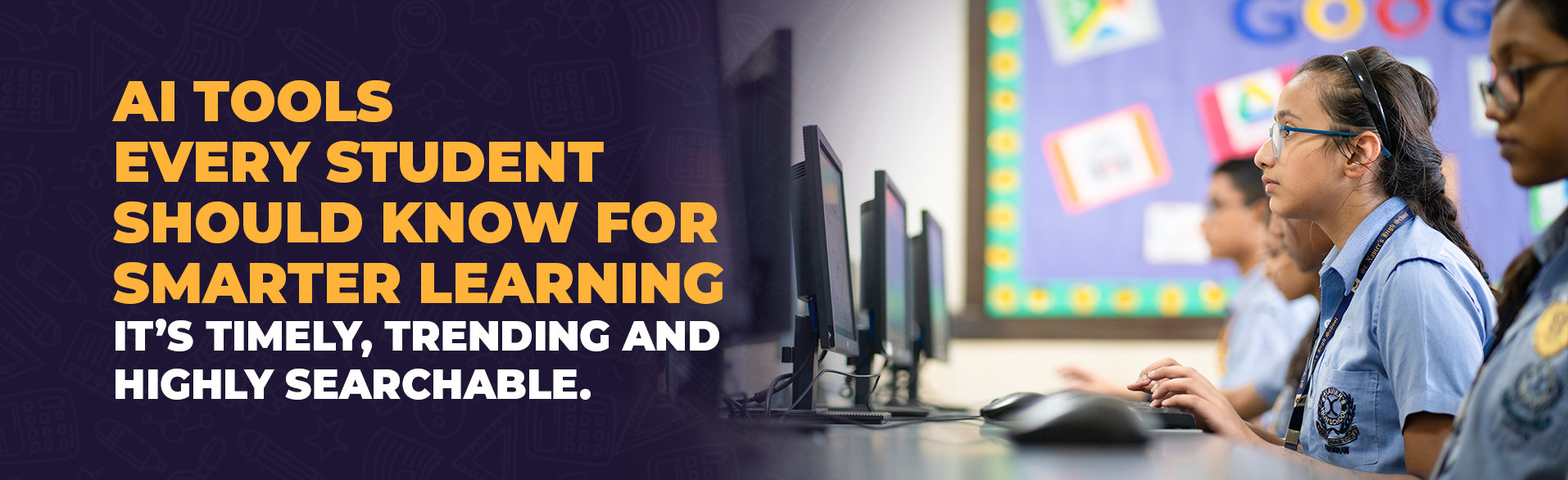
ChatGPT explains photosynthesis four different ways until one clicks. It breaks down quadratic equations step by step while the textbook sits open. It catches grammar mistakes before the teacher sees them. None of that is cheating. All of that is studying, provided the student still does the part where understanding forms inside their own head.
Why Smart Learning Tools Shifted the Ground Under Traditional Study Habits
A Class IX student stuck on a physics problem at 9 PM had one option two years ago. Wait until tomorrow. Today that student types the question and gets a breakdown in thirty seconds. Smart learning tools did not replace teachers. They filled the gap between classroom and study desk where confusion quietly builds.
The part most people miss is what happened to students who already lacked discipline. The same tool that helps a motivated learner understand faster helps a lazy one avoid understanding entirely. Same interface. Opposite outcomes. What most households need is a five-minute conversation about when to open the app and when to close it.
Tools That Actually Help With Research — and the Ones That Pretend To
Not every AI tool is worth a student's time. Some look impressive and produce nothing useful. Half the apps marketed as educational AI are glorified search bars with a chatbot skin. The ones worth mentioning passed a simple test: does the student understand the topic better after using the tool than before?
Google NotebookLM is the one most parents have not heard of. Upload textbook PDFs and class notes, then ask questions against that specific material. Answers come from what the student is actually studying, not from a random blog written for a different syllabus.
- Wolfram Alpha: Shows the working, not just the answer. A student preparing for board exams needs the method because the exam tests the method. Every calculator gives the answer. This one teaches the route to it.
- Socratic by Google: Works through a phone camera. Point it at a homework question and get a concept breakdown by subject. Useful when the textbook reads like it was written for someone who already understands the topic.
The temptation is letting the tool replace reading entirely. A student who asks NotebookLM to summarise a chapter and reads only the summary has skipped the part where understanding actually builds. These tools work best when the student reads first, gets stuck on something specific, and then asks the tool to clarify that one thing.
Writing Gets Easier When the First Draft Stops Being Terrifying
Ask a student to explain their weekend and words pour out. Ask them to write about climate change and the screen stays blank for twenty minutes. That gap between speaking and writing is where AI tools earn their place. Not by doing the writing. By making the blank page less paralysing.
- Grammarly: Catches errors as the student types. Comma mistakes, passive voice, and awkward phrasing are corrected instantly. Feedback received during writing is far more effective than corrections seen days later on a marked assignment.
- QuillBot: Suggests alternative phrasings when a sentence feels awkward. Students choose the version closest to their own voice. Over time, cleaner writing begins to happen naturally without relying on the tool.
The pattern across both tools is the same. They catch problems the student would not notice independently. The goal is not permanent dependence. It is a temporary scaffold that gradually disappears as the learner develops confidence and skill.
The Conversation Parents Need to Have Before Handing Over the Password
Here is where most articles list warning signs and simply say "monitor screen time." That is not enough. The real conversation is about what your child does in the five seconds between reading a homework question and reaching for an AI tool. That gap determines whether learning actually happens.
If the reflex is immediate, the thinking muscle never gets exercised. A student who thinks first and checks with the tool afterward is studying. One who immediately copies the question into ChatGPT is outsourcing the thinking process instead of developing it.
Verification matters because AI can produce confident but inaccurate answers.
- A Class VII student asked ChatGPT about Indian history and received two Mughal emperors in the wrong sequence. The explanation sounded convincing but was factually incorrect. A student who cross-checks catches the mistake. One who blindly trusts the output submits incorrect work.
- A Class X student relied on an AI-generated biology summary that completely skipped an important process frequently tested in board examinations. The summary appeared complete, but only the textbook contained the missing concept.
Where This Actually Leads When the School Gets It Right
These tools evolve every few months. New names replace old ones. What remains constant is the habit of approaching technology with equal parts curiosity and critical thinking. A learner who questions what appears on a screen at thirteen is far more likely to question unreliable information at twenty-three.
At St. Xavier's High School, Sector 49, Gurgaon, STEAM labs give learners an environment where technology becomes a problem-solving tool rather than a shortcut. The Tech Club and XAV-EDGE programme encourage students to use AI learning tools as fuel for curiosity, critical thinking, and deeper understanding instead of treating them as a replacement for learning.